.svg)
Edible Food Recovery Program
.svg)


Divisions
Utilities Department
Contact Us
Main: (951) 736-2234
Customer Care: (951) 736-2321
Fax: (951) 736-2455
CustomerCare@CoronaCA.gov
In an emergency, please call
(951) 736-2234
City of Corona's Edible Food Recovery Program
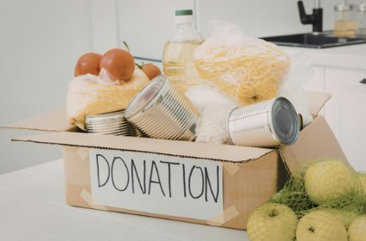
California Senate Bill 1383 (SB 1383) sets requirements for all edible food generators to donate excess edible food and divert organic waste from landfills. The law requires cities to establish edible food recovery outreach and inspection programs, connect mandated edible food generators with food recovery organizations/services, and ensure there is sufficient county-wide capacity for all recovered edible food.
Edible food refers to food intended for people to consume, including items that may not be sold due to appearance, age, freshness, grade, surplus, and similar factors. This category includes prepared foods, packaged foods, and produce. All edible food must comply with the food safety standards outlined in the California Retail Food Code.
California’s Good Samaritan Law encourages businesses to donate surplus food by offering liability protection. Under the Good Samaritan Food Donation Act, donors are:
- Protected from liability when donating food to qualified hunger‑relief organizations
- Shielded from civil and criminal liability if a donated product given in good faith later causes harm
- Provided standardized liability protections, removing the need to investigate varying liability laws
Tier 1 and Tier 2 Generators
Edible Food Generators are labeled as Tier 1 or Tier 2 generators. As of 2024, Tier 1 and Tier 2 edible food generators are required to recover the maximum amount of edible food that would otherwise be disposed of. To see if your business falls into the Tier 1 or Tier 2 categories, please see below:
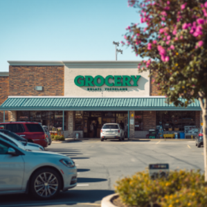
Tier 1 Generators
- Grocery Stores ≥ 10,000 sq. ft.
- Supermarkets
- Food Service Providers
- Food Distributors
- Wholesale Food Vendors
Tier 2 Generators
- Health Facilities with Food Facility and 100+ beds
- State Agency Cafeterias ≥ 5,000 sq. ft. or 250+ seats
- Local Education Agencies with Food Facility
- Restaurants ≥ 5,000 sq. ft. or 250+ seats
- Hotels with Food Facility and 200+ rooms
- Large Venues and Events
Required Documents and Recordkeeping
In addition to donating food, SB 1383 requires edible food generators to keep extensive records of all food that has been donated. All edible food generators must have a current and valid written agreement or contract with at least one food recovery organization. The agreement or contract must be always kept on site, physically or digitally.
In addition to the agreement, edible food generators must keep the following records:
- The name, address, and contact information of the service or organization food was donated to
- The types of food that have been and will be collected or self-hauled to the food recovery organization
- The quantity of food collected or self-hauled (in pounds) to a food recovery organization for food recovery on a monthly basis
Food Recovery Organizations and Services
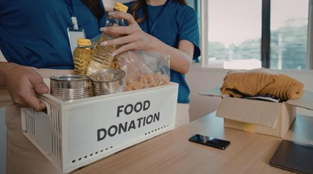
SB 1383 requires Tier 1 and Tier 2 edible food generators to recover the maximum amount of their edible food that would otherwise be disposed; however, it does not require food recovery organizations and services to participate. Each food recovery organization and service may decide at its own discretion if they would like to partner with an edible food generator, as well as what food they will accept.
Why Donate Excess Edible Food?
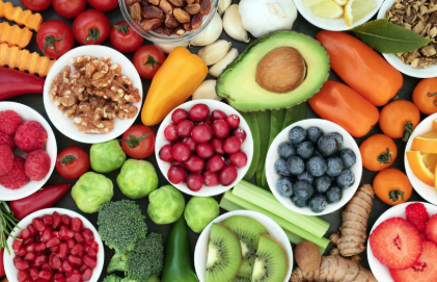
Donating excess food ensures you are playing your part in reducing the staggering 11.2 billion pounds of food thrown away in our landfills annually. This helps to minimize the amount of greenhouse gas emissions in our environment.
In addition, donating food helps combat the 1 in 4 Californians experiencing food insecurity.
Lastly, your business may be eligible for a tax deduction.
Additional Resources
The City of Corona is dedicated to helping your business gain compliance with SB 1383 regulations. Below is additional information regarding edible food recovery and resources available to your business. For additional information, or PDF copies of the materials below, please email CoronaRecycles@CoronaCA.gov.
5 Steps to Maintaining an Edible Food Program
Setting up and maintaining a food donation program can be completed in five (5) simple steps.
First, businesses should identify food that is fit for donation. This can often times be food that was held for service but not ultimately served, excess inventory due to an ordering error or miscalculation, or dated food, as expiration dates refer to the quality, not safety. Most food items that are past the date label can be donated if they still look, smell, and feel safe to eat.
Next, it is important for businesses to establish the logistics of food donations. Identifying where food donations will be stored and designating specific trained staff to be responsible for food donation are key factors in creating a successful food donation program.
After the logistics are sorted, connecting with a Food Recovery Organization (FRO) and establishing a written agreement allows businesses to secure a recipient for their edible food donations. Businesses are required to always keep a copy of their agreement on-site, physically or digitally.

It is important to develop procedures for staff to follow when identifying what foods are available for donation. A sample process includes outlining foods that are unfit for donation, taking photos of where food donations are stored, marking which foods are intended for donation to their respective FROs with their scheduled pickup date, and listing contact information for the personnel that are in charge.

The last step to setting up and maintaining a successful edible food donation program is record keeping. Edible food generators are required to have a written contract or agreement with at least one Food Recovery Organization (FRO), documenting the:
- Name, address, and contact information of the service or organization
- Types of food that will be collected or self-hauled
- Established frequency that the food will be collected or self-hauled
- Quantity of food collected or self-hauled, measured in pounds per month
After achieving these five (5) steps, your business will have set up and maintained a successful edible food recovery program.
For information pertaining to edible food recovery and grant funding, please see below.
- CalRecycle’s Edible Food Recovery Website
Click here for additional information regarding edible food recovery from CalRecycle’s website.
- CalRecycle’s Grants and Funding Opportunities
Click here for additional information regarding grants and funding opportunities from CalRecycle’s website.
