.svg)
The Corona Utility Brief ("CUB"): Fall 2026 Newsletter
Don't Get Stuck with a Clogged Drain This Holiday Season

As many households celebrate various holidays during this season and cook for family and friends, this is your reminder to keep your drains free of fats, oils, and grease (FOG) which are frequently used when cooking, or are cooking by-products (e.g., bacon grease). To safely and properly dispose of FOG, wait for the FOG to cool down after cooking, then scrape it into a food scrap recycling bin or other container, such as an old metal coffee can. Never put FOG down the drain.
Putting FOG down your drain is harmful, even when simultaneously running hot water with dishwashing liquid, because FOG still solidifies and sticks to the inside of sewer pipes. FOG buildup reduces pipe diameter, which can cause slow drainage, foul odors, and eventually create blockages that can lead to raw sewage backing up into your home or onto the streets.
Once FOG enters the City’s sewer network, it combines with the materials leaving other homes and businesses across the system, such as wet wipes and sanitary products, which come together and form large masses of FOG and trash. As the sewer system’s ability to handle wastewater gets diminished over time, the reduced capacity can lead to blockages, backups, and overflows. Clogged sewer main lines and overburdened pump stations and treatment plants can lead to costly repairs and maintenance. Sewer overflows can release untreated or partially treated sewage into our streets, basements, and waterways, posing serious public health and environmental risks. These events can place a strain on our infrastructure and tie-up ratepayers' money to remediate preventable issues. Let’s keep our system clean by properly handling and disposing of FOG one household at a time!
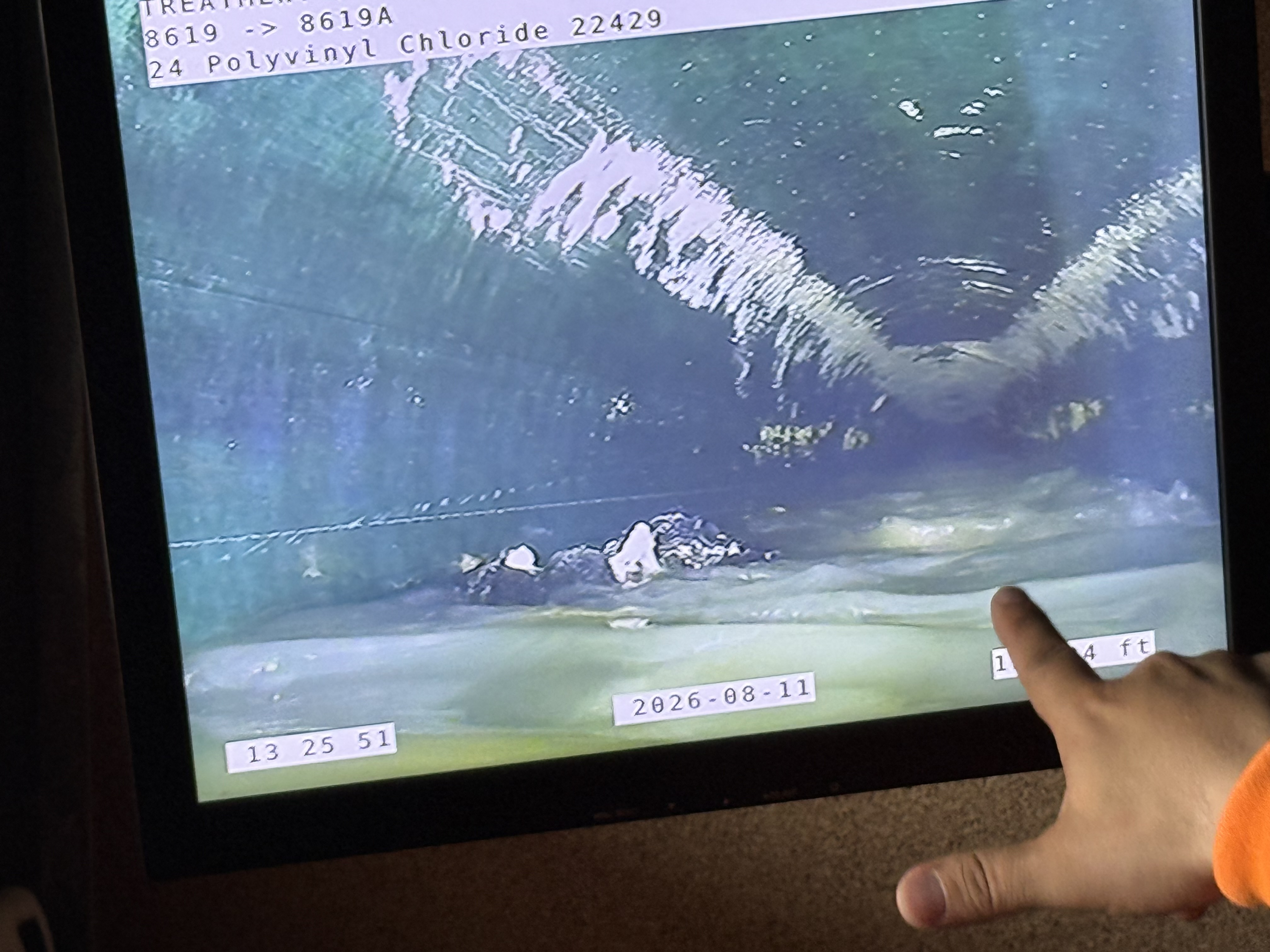
The City of Corona Utilities Department’s FOG Control Program aims to prevent sewer blockages and environmental impacts by monitoring FOG in the system. Staff perform regular inspections and cleaning of the system, with cleaning scheduled as frequently as monthly at identified high maintenance areas.
From July 1, 2025 to June 30, 2026, a total of 1,551 FOG inspections were completed across 387 grease interceptors, 121 clarifiers, and 21 grease traps at restaurants and commercial food prep facilities. During these inspections, we check to make sure there is no damage to the infrastructure and review the waste manifest(s) of the most recent cleaning(s).
The Utilities Department would like to thank our customers for their part in keeping their drains FOG-free. From 2003 to 2024, the average number of sewer overflow events was 10 per year, and in 2025, there was just one sewer overflow event. This achievement would not have been possible without your partnership!
Interested in learning more about our FOG Program? Access our Sewer System Management Plan (SSMP) here.
What to do with Your Kitchen Scraps: Organics Recycling
In California, organic waste is 48%, by weight, of what gets thrown away in landfills (CalRecycle). When organic waste breaks down in landfills, it emits harmful methane gas, which warms the atmosphere at a much faster rate than carbon dioxide. By diverting organic waste from the landfills, we can reduce harmful methane pollution, which benefits our climate, air quality, and overall public health.
Senate Bill (“SB”) 1383 is California’s organic waste and recycling legislation, which aims to reduce greenhouse gas (GHG) emissions and promote sustainability by addressing organic waste management. Effective January 1, 2022, all Californians are required to separate organic waste from their trash and recycling. Organic waste includes food waste, yard waste, and food-soiled paper products.
As a resident, you play an essential role in the success of Corona’s organics recycling program. By doing your part, you contribute to a cleaner, more sustainable environment. That banana peel from your afternoon snack? The chicken bones from your dinner? The weeds you picked out from your yard? Toss all of it into the organics bin! It will be picked up by Waste Management (WM) and taken to a facility where it can be turned into compost.
Please follow proper sorting practices by placing waste into the correct bins.
Examples of acceptable items in the organics stream include:
- Food scraps (eggshells, fruits, vegetable tops, bread, etc.)
- Fats, oils, and grease (FOG)
- Coffee grounds
- Dairy products
- Uncoated food-soiled cardboard and paper
- Note: uncoated paper products are those that do not have a waxy or plastic lining
- Yard waste (leaves, weeds, grass, tree branches, etc.)
Contamination occurs when you place non-acceptable items in the incorrect cart, which can affect an entire load of organics or recyclables, preventing the materials from going on to have a second life.
Examples of non-acceptable items in the organics stream include:
- Plastic bags
- Plastic serve ware/utensils
- Plastic containers
- Foam containers
- Hazardous materials, including pet waste
To learn more, you can visit https://calrecycle.ca.gov/organics/slcp/. For updates and additional information from the City’s franchised waste hauler, Waste Management (WM), visit www.wm.com/recycleright.
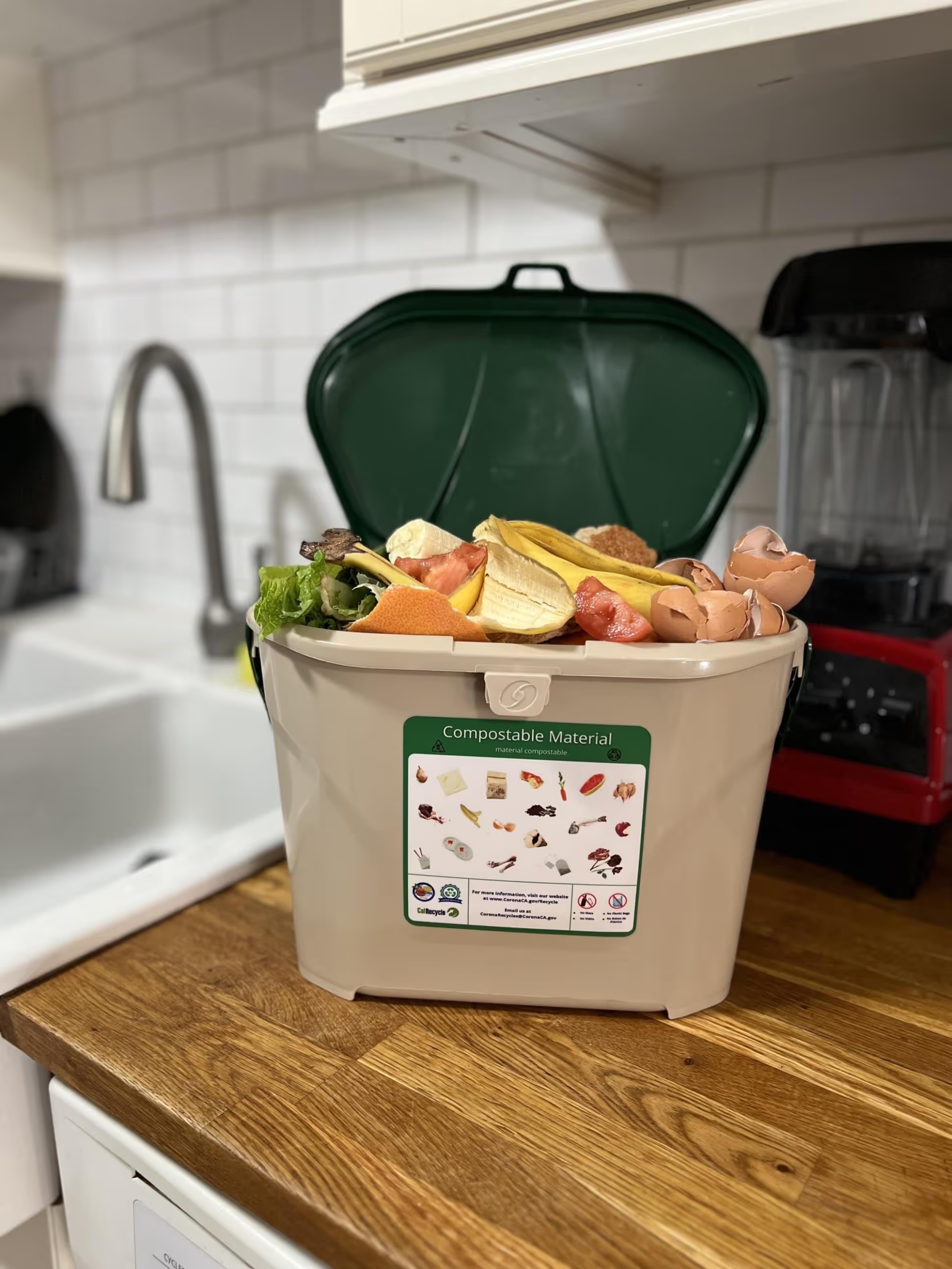
Also, did you know that Corona residents can request a FREE kitchen compost caddy to make sorting at home easier? These caddies are used to collect food scraps and include a lid to limit any odors. The organic waste that you collect in the caddy can be easily transferred into your organics cart for regular weekly collection! A kitchen compost caddy can be placed wherever makes sense for your household—common locations include under the kitchen sink or on your kitchen countertop. To request one, please email CoronaRecycles@CoronaCA.gov, with “Kitchen Compost Caddy Request” in the subject line. Please be sure to include your service address and account holder name or account number in the request. Staff will respond with your pick-up instructions at our Utilities Headquarters at 755 Public Safety Way, Corona, CA 92878.
Ask Customer Care: Toilet Leak
Q: I think I have a toilet leak. What can I do?
A: To test for a toilet leak, use a toilet dye tab or food coloring.
Step 1: Drop a dye tab or a few drops of foodcoloring into your toilet tank.
Step 2: Wait 15-30 minutes. Do not use or flush the toilet during this time; make sure to also let everyone else within your household know that you are performing a leak test.
Step 3: Check the water in your toilet bowl for any color transfer—if there is color, this indicates a toilet leak, as water has seeped from the toilet tank into the toilet bowl.
A failed toilet flapper is a common culprit behind most toilet leaks—as materials wear down over time, the flapper no longer forms a good seal, which causes water to leak into the toilet bowl and down the drain.
When you discover a toilet leak, shut off the toilet valve (usually located on the wall behind the toilet) to avoid additional water waste while you work on replacing any failed toilet flapper or other part(s). Install the new part, turn the shut-off valve back on, and listen for any hissing noise, or perform another toilet dye tab test. If the leak persists, contact a licensed plumber.
Please note, color may continue to appear in your toilet bowl after you perform your toilet dye tab/food coloring test. You will need to flush at least one to two times before the water runs clear.
Think you have a leak? You can request FREE toilet dye tabs by calling (951) 736-2234 or emailing StopTheDrop@CoronaCA.gov, with “Toilet Dye Tab Request” in the subject line. Please be sure to provide your service address and account holder name or account number in the request. Staff will respond with your pick-up instructions at our Utilities Headquarters at 755 Public Safety Way, Corona, CA 92878.
Meet the Corona Utilities Employee Association (CUEA)
Formed in September 2025, the Corona Utilities Employee Association (CUEA) is the City’s newest employee association. CUEA represents State-certified non-supervisory utilities staff, which covers the Water Production, Operations, Water Reclamation, Infrastructure & Construction, and Maintenance Divisions.
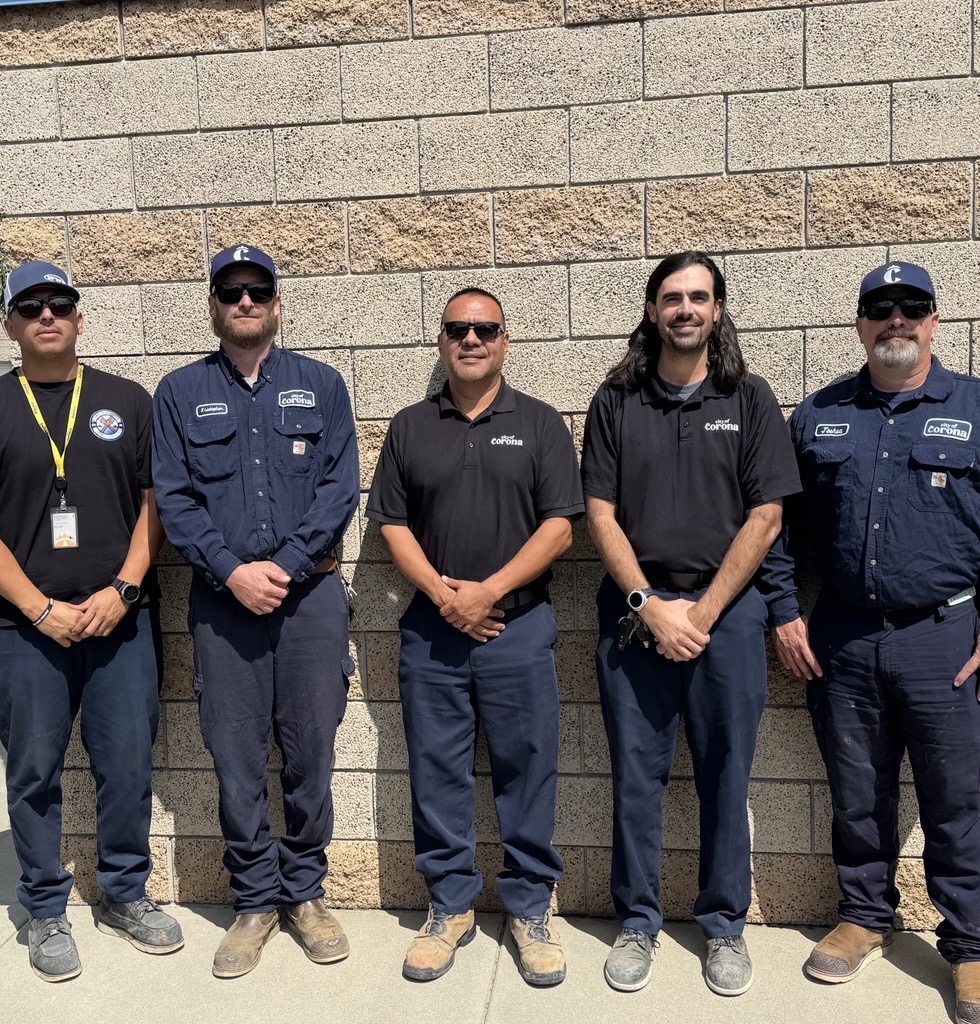
CUEA negotiates specialized provisions relevant to utility operations, ensuring that the staff who keep our essential operations running are properly supported. “Our guys handle everything from [drinking] water treatment, to water distribution, to [system maintenance], to water reclamation,” says CUEA President Rafael Vazquez. Providing staff with training and support for obtaining State certifications is a top priority for the Association. When employees have the tools, training, and support they need, they are able to respond to issues efficiently, maintain higher reliability across the water and wastewater systems, and uphold the strict regulatory standards that protect public health and environment.
“There are six job series in our represented body, [and] each CUEA Board member understands the job functions of each group,” says CUEA Secretary Andrew Farah. By bringing together perspectives from both field and facility operations, the Board can identify training gaps, staffing needs, safety concerns, and opportunities for professional growth, because the Board fully understands how those improvements impact daily operations. Each job series has unique responsibilities and challenges, and having representative leaders and workers within one union allows CUEA to make well-rounded, informed decisions that genuinely reflect on-the-ground needs.
While CUEA’s mission focuses on supporting utilities employees, its impact reaches every household and business served by the City of Corona. By advocating for proper staffing, ongoing training, and rigorous certification standards, CUEA helps ensure that the staff responsible for treating, delivering, and reclaiming water are fully prepared to keep essential systems running safely and efficiently in our City. CUEA’s commitment to professional excellence directly strengthens service quality, helping ensure safe drinking water and consistent operation of critical facilities.
📢 Call to Artists: Logo Design for the Corona Utility Brief (“CUB”)
The City of Corona Utilities Department is inviting all local artists, designers, and creative community members to submit logo concepts for our newsletter, the Corona Utility Brief (“CUB”). This newsletter will highlight important updates, tips, and stories related to water, recycling, energy, and sustainability efforts across Corona.
We are seeking a logo that is eye-catching and friendly, aligned with sustainability themes, and representative of Corona. Designs should have a transparent background and submissions should be provided in a high-resolution PNG format.
Please submit your design by December 6, 2026. Email your logo, with a short description of your design concept, and artist information to Jasmine.Do@CoronaCA.gov with the subject line “CUB Logo Submission.”
We cannot wait to see the creativity and talent our community has to offer. Thank you for helping bring the CUB to life!

.jpg)